swangi@zju.edu.cn
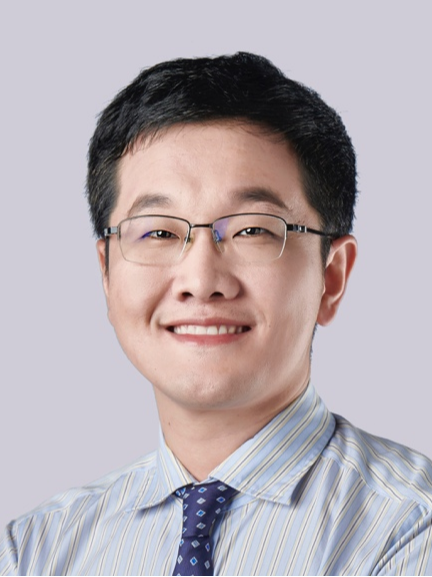
Shuai Wang, Ph.D., Tenured associate professor. Dr. Wang’s research focuses on how the microstructure-property of energy structural materials evolves as they interact with aggressive environments, such as high-pressure hydrogen gas, electrochemical processes, and radiation. The goal of his research is to enhance the understanding of the underlying mechanisms for the strengthening and failure processes, and to formulate a physical model for the selection and design of stronger and safer new materials, which is a crucial tool for the new energy society.
He received his doctoral degree from Hokkaido University, Japan, in 2013. After graduation, he worked as a postdoctoral researcher at Kyushu University, Japan. From 2015 to 2018, he worked as an associate researcher at the University of Wisconsin-Madison, USA. From 2018 to 2025, He worked as an associate professor at Southern University of Science and Technology. He joined the Hydrogen Energy Institute at Zhejiang University as a tenured associate professor in 2025.
Research Areas
Publication highlights
1. Z. Yao, L. Bao, M. Yang, Y. Chen, M. He, J. Yi, X. Yang, T. Yang, Y. Zhao, C. Wang, Z. Zhong, S. Wang*, X. Liu, Thermally stable strong <101> texture in additively manufactured cobalt-based superalloys, Scripta Materialia 242 (2024) 115942.
2. Z. Yao, M. He, J. Yi, M. Yang, R. Shi, C. Wang, Z. Zhong, T. Yang, S. Wang*, X. Liu, High-strength titanium alloy with hierarchical-microstructure design via in-situ refinement-splitting strategy in additive manufacturing, Additive Manufacturing 80 (2024) 103969.
3. Q. Liu, J. Lu, Z. Luo, J. Yi, M. He, Y. Zhao, S. Wang*, Enhancing corrosion resistance of additively manufactured 316L stainless steel by fabricating pillar arrays, Materials & Design 230 (2023) 111940.
4. Q. Sun, J. He, A. Nagao, Y. Ni, S. Wang*, Hydrogen-prompted heterogeneous development of dislocation structure in Ni, Acta Materialia 246 (2022) 118660.
5. H. Cao, W. Lu, M. Yi, S. Wang*, Deformation and failure by weaving dislocation networks in body-centered-cubic tungsten, Materials & Design 223 (2022) 111182.
6. H. Cao, S. Wang*, The effect of hydrogen on dislocation motion and cracking in tungsten foil, Corrosion Science 207 (2022) 110547.
7. M. He, H. Cao, Q. Liu, J. Yi, Y. Ni, S. Wang*, Evolution of dislocation cellular pattern in Inconel 718 alloy fabricated by laser powder-bed fusion, Additive Manufacturing. (2022) 102839.
8. H. Li, Z. Zheng, J. He, A. Nagao, Q. Sun, S. Wang*, Dislocation evolution in copper in the absence and presence of hydrogen, Materials Science and Engineering: A. 842 (2022) 143082.
9. Q. Sun, F. Cao, S. Wang*, Nanoscale corrosion investigation of surface nanocrystallized 7150 Al alloy in 3.5 wt% NaCl solution by using FIB-TEM techniques, Corrosion Science. 195 (2022) 110021.
10. J. He, Z. Zeng, H. Li, S. Wang*, The microstructure and mechanical properties of copper in electrically assisted tension, Materials & Design 196 (2020).
11. Q. Sun, Y. Ni, S. Wang*, Orientation dependence of dislocation structure in surface grain of pure copper deformed in tension, Acta Materialia 203 (2021) 116474.
12. S. Wang*, A. Nagao, P. Sofronis, I.M. Robertson*, Assessment of the impact of hydrogen on the stress developed ahead of a fatigue crack, Acta Materialia 174 (2019) 181-188.
13. S. Wang*, A. Nagao, P. Sofronis, I. M. Robertson*, Hydrogen-modified dislocation structures in a cyclically deformed ferritic-pearlitic low carbon steel, Acta Materialia 144 (2018) 164-176.
14. S. Wang, A. Nagao, K. Edalati, Z. Horita, I.M. Robertson, Influence of hydrogen on dislocation self-organization in Ni, Acta Materialia 135 (2017) 96-102.
15. S. Wang, M.L. Martin, I.M. Robertson, P. Sofronis, Effect of hydrogen environment on the separation of Fe grain boundaries, Acta Materialia 107 (2016) 279-288.
16. S. Wang, M.L. Martin, P. Sofronis, S. Ohnuki, N. Hashimoto, I.M. Robertson, Hydrogen-induced intergranular failure of iron, Acta Materialia 69 (2014) 275-282.
17. S. Wang*, N. Hashimoto, Y. Wang, S. Ohnuki, Activation volume and density of mobile dislocations in hydrogen-charged iron, Acta Materialia 61(13) (2013) 4734-4742.
18. S. Wang*, K.E. Nygren, A. Nagao, P. Sofronis, I.M. Robertson, On the failure of surface damage to assess the hydrogen-enhanced deformation ahead of crack tip in a cyclically loaded austenitic stainless steel, Scripta Materialia 166 (2019) 102-106.